
by Stephen Judd
Share
Luke 19:28–40
Palm Sunday marks one of the most remarkable moments in the life of Jesus. He entered Jerusalem surrounded by expectation. Palm branches were waving, voices were shouting, and hearts were hoping. The crowd believed the King had come.
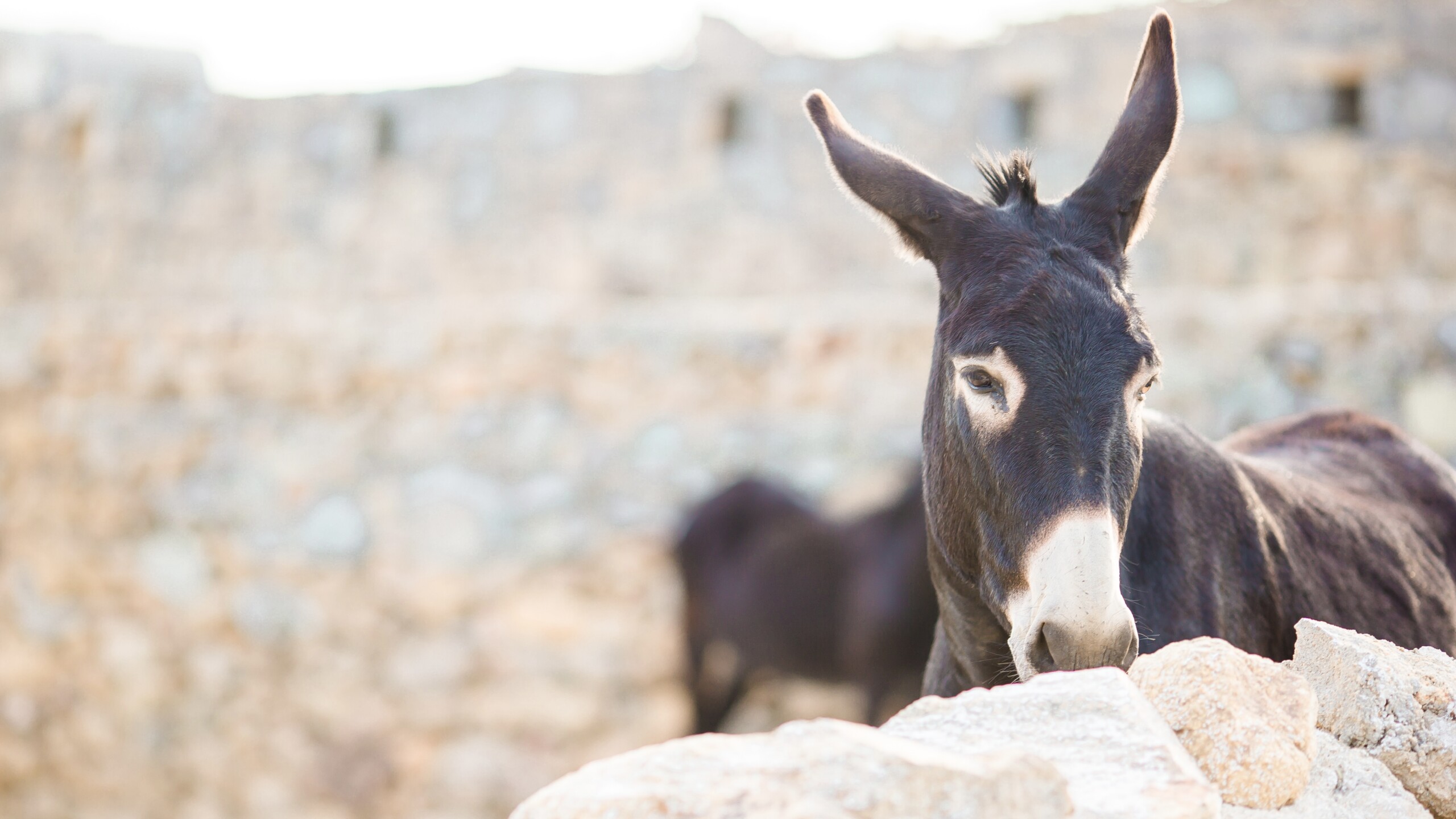
But Jesus did not enter Jerusalem riding a war horse, the symbol of conquest and earthly power. He did not come in royal splendor or political triumph. Instead, He came riding on a borrowed donkey.
He came not in pride, but in humility. Not to claim an earthly throne, but to go to a cross.
And tucked inside this familiar Palm Sunday story is a simple statement that is easy to overlook.
Jesus sent two of His disciples ahead and told them they would find a colt tied there. If anyone questioned why they were taking it, they were to give this answer:
“The Lord has need of him.” —Luke 19:31 NKJV
We have probably all heard it said that God does not need us. And in one sense, that is certainly true. God is sovereign and self-sufficient. His existence and power are not dependent upon us. He was God before we arrived, and He will still be God when we are gone.
But there is another truth we must not miss.
God has chosen to accomplish His work through people.
He could do it without us. But again and again throughout Scripture, He chooses to work through willing lives.
He needed a Noah who would build an ark. He needed a Moses who would stand before Pharaoh. He needed an Esther who would risk approaching a king. He needed a Mary who would say, “Let it be to me according to your word.”
And on Palm Sunday, the Lord needed a donkey.
More specifically, He needed someone willing to release that donkey for His use.
An unnamed man with something God could use
There are many people I would like to meet when I reach heaven. Some might want to talk with Paul about theology, Abraham about faith, or David about facing giants.
But I would like to meet the man who owned the donkey.
We are not told his name. We do not know his occupation or anything about his background. Scripture gives us virtually no information about him.
But we do know something important about him.
We know what he gave.
When the disciples came for the colt, its owners asked why they were loosing it. The disciples explained that the Lord needed it, and apparently, that was enough.
The owner released what he had because the Lord had a use for it.
He could never have imagined how significant that simple act of surrender would become. He was providing the animal that would carry Jesus into Jerusalem in fulfillment of prophecy. Something ordinary in his possession became part of an extraordinary moment because he made it available to God.
That is still how God works.
You may not think you have much to offer. You may not consider your abilities exceptional. You may never stand behind a pulpit, lead a ministry, or have your name recognized by thousands of people.
But God can do extraordinary things with ordinary lives that are made available to Him.
Chosen for His purpose
There were undoubtedly many donkeys around Jerusalem. They were common animals and an ordinary means of transportation.
Yet Jesus did not tell His disciples simply to find a donkey. He gave them specific instructions. They would go to a particular place and find a particular colt tied there.
The Lord knew exactly where it was.
And He chose it.
While we might not enjoy being compared to a donkey, we can certainly rejoice in the fact that we, too, have been chosen by God. Jesus said in John 15:16 (KJV), “Ye have not chosen me, but I have chosen you…” Ephesians 1:4 reminds us that He chose us before the foundation of the world. Peter wrote that we are a chosen generation, called out of darkness into His marvelous light.
This does not mean that we have no response in the matter of salvation. Scripture teaches that those who are saved are those who respond to His grace. God’s foreknowledge does not override human will. He calls, He reaches, and He invites. We must respond. What a miracle of grace that is.
Just like that donkey, we are chosen for a purpose.
The Lord still needs willing people
God does not need our ability in the sense that His power is somehow diminished without us. But He has chosen to make willing human beings part of His redemptive work in the world.
Jesus entrusted the gospel to His followers:
“Go into all the world and preach the gospel to every creature.” —Mark 16:15 NKJV
He could have assigned that responsibility to angels. He could have written the gospel across the sky. He could have chosen countless other ways to make Himself known.
Instead, He chose us.
We are His hands. We are His feet. We are His voice in the world.
There are people who will encounter the love of Christ because one of His followers showed them kindness. Someone will hear the gospel because another believer was willing to speak. Someone will be encouraged because a Christian noticed their pain. Someone will discover hope because an ordinary person allowed God to use an ordinary moment.
None of us is indispensable.
But none of us is insignificant either.
The Lord still needs willing people.
What God uses, He first loosens
There is another detail in this story that deserves our attention.
Before the donkey could carry Jesus, it had to be untied.
Jesus told the disciples:
“Loose it and bring it here.” —Luke 19:30 NKJV
The colt had been chosen. It was needed. But it could not fulfill its purpose while it remained tied.
What God uses, He first loosens.
The same is often true in our lives.
We can be tied to fear. Tied to guilt. Tied to habits. Tied to disappointment. Tied to the opinions of others. Tied to wounds from our past.
We may genuinely love God and still have areas of our lives that keep us from being fully available to Him.
But Jesus came to set people free.
“Therefore if the Son makes you free, you shall be free indeed.” —John 8:36 NKJV
Sometimes the very thing standing between us and greater usefulness in the kingdom is something we are still holding onto, or something that is still holding onto us.
The Lord’s instruction is still appropriate:
Loose it.
Let go of what keeps you from becoming everything God has called you to be.
Freedom is not merely about what God delivers us from. It is also about what He frees us for.
He sets us free for His purpose.
Under the Master’s control
Luke tells us something else unusual about the colt:
“On which no one has ever sat.” —Luke 19:30 NKJV
It had never been ridden.
Anyone familiar with an unbroken animal understands the significance of that statement. Yet there is no indication in the Gospel account that the colt resisted Jesus.
The animal that had never carried anyone carried the King.
There is a spiritual picture here that is difficult to miss.
There are areas of human nature that do not naturally want to submit. We want our own way. We want control. We want to determine our own direction.
But when Jesus becomes Lord, something changes.
James wrote:
“Therefore submit to God. Resist the devil and he will flee from you. Draw near to God and He will draw near to you.” —James 4:7–8 NKJV
Notice the order.
Submission comes before authority.
We submit ourselves to God, and then we are able to stand against what opposes His purpose in our lives.
The greatest question is not whether Jesus is present somewhere in our lives. The question is whether He is Lord of our lives.
When Christ takes His rightful place, He brings order to what was once unruly. He gives direction to what was wandering. He brings purpose to what seemed ordinary.
Carrying Jesus into the world
The donkey had one assignment that day.
Carry Jesus.
It was not the center of attention. The crowds were not gathered to see the donkey. The palm branches were not being waved in its honor. The praises were not directed toward it.
It simply carried Jesus where people could see Him.
What a beautiful picture of the Christian life.
Our calling is not to draw attention to ourselves. It is to make Jesus visible.
Our words should carry Jesus.
Our actions should carry Jesus.
Our attitudes should carry Jesus.
Our lives should carry Jesus into homes, workplaces, neighborhoods, churches, and relationships where people desperately need to see Him.
John the Baptist expressed it perfectly:
“He must increase, but I must decrease.” —John 3:30 NKJV
The greatest compliment that could ever be paid to a follower of Christ is not that people were impressed with us, but that they saw Jesus through us.
That is what the donkey did on Palm Sunday.
It lifted Jesus high enough for the crowd to see the King.
Welcome the King
Palm Sunday is ultimately not about a donkey.
It is about a King.
Jesus entered Jerusalem knowing exactly what awaited Him. The cheering crowd would soon give way to rejection. Palm branches would give way to a cross. Cries of “Hosanna!” would be followed by cries of “Crucify Him!”
And still He came.
He came because He loved us.
Yet hidden within that magnificent story is a reminder for every one of us.
The Lord still has need of willing lives.
Perhaps there is something in your life that needs to be released to Him. Perhaps there is something that needs to be loosed. Perhaps there is an area that has never fully come under His lordship.
Or perhaps you simply need to be reminded that you have something God can use.
Your gifts. Your experience. Your influence. Your time. Your testimony. Your life.
The unnamed owner of that donkey probably never imagined that what he released to Jesus would become part of a story told around the world for more than two thousand years.
He simply heard:
“The Lord has need of him.”
And he let it go.
God is not looking only for the exceptionally gifted, the highly visible, or the widely recognized.
He is looking for people who are available.
So when the King asks for what you have, release it. When He calls you, respond. When He needs someone to carry His presence into a world that desperately needs Him, be willing to say yes.
The Lord has need of you.